
Narcissism therapist
Do you suspect you may be experiencing narcissistic manipulation?
Are you under the influence of a toxic person?
Do you feel a lack of understanding and support?
Are you looking for a professional who understands narcissism as a phenomenon, its harmful impact, and can support you through your situation?
 |  |  |
|---|
What does it feel like to be under the influence of a narcissist?
A narcissist is a highly toxic individual.
Being under the influence of a toxic person can have harmful effects on your psyche and physiology, impacting all areas of your life.
Unpleasant emotional states may begin to appear more and more frequently.
Feelings of worthlessness, anxiety, and inadequacy.
A loss of self-esteem, and a sense of being hurt and emotionally drained.
Narcissistic behavior often creates a constant state of stress for the target, which can progress to burnout, depression, or even serious illness.
Have you experienced these kinds of feelings?
Is there a narcissistic person in your relationship, family, close circle, or workplace?
Millaista terapiaa narsisti tarvitsee?
Narsistien uhreja mietityttää usein, olisiko narsistin mahdollisuus "parantua" terapian kautta.
Oheisessa videossa valotan tätä asiaa.

5 askelta vapauteen
Ratkaisukeskeisiä itsehoitomenetelmiä parisuhdenarsismin uhrille

Haluatko irtautua narsistisesta parisuhteesta, toipua kokemastasi ja vahvistua tulevaisuutta varten ratkaisukeskeisten itsehoitomenetelmien avulla?
Tämä opas on tarkoitettu tueksi henkilöille, jotka ovat kokeneet erilaisia väkivallan muotoja narsistisessa parisuhteessa.

Are you in a constant state of stress in your relationship?
Helpless
Powerless
Worthless
Bullied
Subjugated
Hurt
Self-esteem
at zero
Diminished
Exhausted
Depressed
Inadequate
Anxious
Fearful
Insignificant
Devalued
Used
Exploited

He may appear attractive on the outside, but be abusive in a relationship.
They may appear beautiful on the outside, but exploit their partner.

Narcissists are all around us, but they are often highly skilled at hiding their true nature behind a mask.

“You will never really see how toxic someone is
until you breathe fresher air.”
Unknown

They may be a respected professional, but at home like a monster.
She may be known as a wonderful mother, yet she continuously manipulates her daughter.

Narcissism as a phenomenon
Narcissism is not a new phenomenon, but it appears to be increasing.
A narcissistic individual is often described as self-centered and driven by personal gain, willing to do whatever it takes to advance their own agenda at the expense of others, often without remorse. Narcissism can manifest in many different ways, which is why it is often referred to as a spectrum. Those who come under the influence of a narcissist typically begin to sense, gradually, that something is not right in the relationship. Realizing that one is the target of narcissistic behavior can come as a shock—or, in some cases, as a relief.
What makes this particularly challenging is that narcissism as a phenomenon is still widely unrecognized, misunderstood, or even denied.
There is limited awareness and support available for those affected. The issue is often minimized or addressed with ineffective approaches, and the experiences of victims are frequently dismissed. Because narcissistic individuals are often highly skilled verbally, they can persuade key people to take their side.
On closer examination, narcissism can be found all around us.
Contemporary societal values that emphasize individualism, superficiality, and material success do not diminish the phenomenon. Narcissism is visible in media, social platforms, politics, institutions, workplaces, families, and close relationships.
The scale of human suffering caused by narcissism is immense. According to global experts, narcissistic individuals may represent up to 15% of the population—significantly more than official statistics suggest, as such individuals rarely seek diagnosis. Each of them is estimated to negatively impact at least three other people. In Finland alone, this would correspond to approximately 700,000 adults affected. A vast number of people suffer from trauma caused by narcissistic individuals, many in silence. The psychological burden can be severe, affecting overall health, eroding self-esteem, and in the most serious cases leading to loss of work ability or even death in the context of abusive relationships.
The many roles of narcissism
Narcissistic individuals can be found in any role within a person’s close circle—such as partners, family members (including parents, siblings, and children), friends, or within the workplace as supervisors, colleagues, or subordinates.
They are also present across society in various roles within institutions, organizations, associations, and authorities. No environment is entirely free from the influence of narcissism—an estimated 15% means roughly 1.5 individuals out of every ten.

Are you the scapegoat in your family?
This is the result of a narcissistic parent’s behavior.
Narcissistic Mother
A narcissistic mother can create a deep sense of inadequacy and shame. In this video, I explore how a narcissistic mother affects adulthood, how shame is transmitted across generations, and why setting boundaries—or even cutting contact—can be a psychologically necessary step in the healing process.
Työpaikkanarsismin asiantuntija
Yhdistän työssäni terapeuttisen osaamisen, pitkän työelämätaustan ja organisaatiotuntemuksen.
Tarkastelen työpaikkanarsismia organisaatiopsykologisena ilmiönä.
Seuraukset ovat tuhoisia yksilölle, tiimille ja koko organisaatiolle.
Minulla on myös lukuisia omakohtaisia kokemuksia työpaikkanarsismista.
Tulevassa kirjassani käsittelen työpaikkanarsismia ja siltä suojautumista.
Koetko narsistista tai manipuloivaa vuorovaikutusta työpaikalla?
Liity mukaan Facebook-ryhmään Narsismi työpaikalla.
Ryhmä tarjoaa tietoa, vertaistukea ja näkökulmia työpaikan henkisesti kuormittaviin tilanteisiin.

Klikkaa kuvaa.
Therapeutic support
I offer therapeutic support to help process distressing experiences, shame, and trauma caused by narcissistic relationships.
My approach is warm, solution-focused, and strengthens a sense of hope.
My clients have received practical, meaningful support.

Do you feel shame as a victim of narcissism?
This video is a calming, guided audio designed to support the regulation of shame and to help the body settle.
The exercise is intended for moments when shame, self-blame, or inner self-diminishment become activated and begin to feel overwhelming.
More exercises are available on my YouTube channel and on Spotify @Terapiamentorea
Maija Aurea as an expert
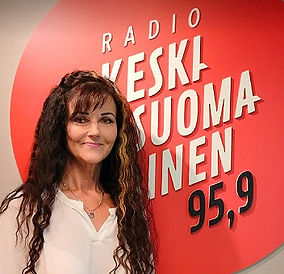


Klikkaa kuvaa avataksesi artikkelin
Kirja-arvostelut


My Customer´s

Suosittelen lämpimästi Maijan lyhytterapiaa.
Hän kohtaa asiakkaan läsnäolevasti ja empaattisesti.
Hän onnistuu luomaan luotettavan ja turvallisen ilmapiirin, jossa uskaltaa avata kipeimmätkin ajatukset ja tunteet.
Jo muutama kerta auttoi itseäni prosessissani eteenpäin, sillä Maija on taitava haastamaan ajatus- ja toimintamalleja sekä antamaan konkreettisia neuvoja.
Maijalla on erittäin vahva osaaminen narsismiin liittyvissä asioissa.
Kiitos tuestasi!
Asiakas, 29